
Flooring for a distillery or brewery is a special case of manufacturing facility where both durability and cleanliness are of the utmost importance. Manufacturers of spirits and wine must take great care to prevent the growth of any bacteria that could negatively impact their final product. In addition, even the smallest distilleries must deal with heavy equipment to transport hundreds of pounds of raw ingredients, which must then be heated and cooled to extreme temperatures all the while being kept completely sanitary. Furthermore, small and large distilleries are welcoming visitors to observe the process through large windows and distillery tours, so the flooring must also look good.
Breweries and distilleries operate in demanding environments where flooring must withstand constant moisture, spills, and heavy equipment traffic. During the brewing and distillation process, floors are frequently exposed to liquids, sugars, acids, cleaning chemicals, and hot water washdowns. Because of these conditions, the flooring system must provide excellent chemical resistance, durability, and easy maintenance. Seamless resinous flooring systems are commonly used in beverage production facilities because they create non-porous surfaces that are hygienic and easy to clean.
Epoxy flooring systems are often installed in packaging areas, storage rooms, and taprooms because they provide strong adhesion to concrete and good resistance to abrasion and chemical spills. These coatings also create seamless surfaces that help protect the underlying concrete from damage caused by heavy foot traffic and equipment movement.
In brewing and fermentation areas where temperatures fluctuate and washdowns are frequent, urethane concrete flooring is often the preferred solution. Urethane cement floors are designed to handle thermal shock, impact, and aggressive cleaning procedures while maintaining a durable and slip-resistant surface.
Another important requirement for brewery and distillery floors is proper slip resistance. Textured finishes and broadcast aggregates can be incorporated into the flooring system to improve traction in wet environments.
Modern resin flooring systems can also be installed with sloped surfaces that direct liquids toward drainage systems, helping maintain sanitation and prevent standing water.
By selecting the appropriate flooring system for each area—brewhouse, fermentation cellar, bottling line, warehouse, and tasting room—breweries and distilleries can create safe, hygienic, and long-lasting floors that support efficient production operations.
Urethane Concrete flooring systems for distilleries fill all of these needs. It provides a hard-working and beautiful floor that can stand up to the most challenging environments proposed by brewing and distillery facilities.
Spirits are acidic, and they will attack unprotected concrete by reacting with the cement binder. A urethane concrete flooring can be applied to completely cover any properly prepared concrete floor, and it can be seamless, with no joints that might introduce bacteria into the environment. The distilling process involves heavy bags of grains, hundreds of gallons of both extremely hot water that can reach up to 200 degrees Fahrenheit, and cold water as well as steam and cleaning chemicals. The floors must be slip-proof and resistant to thermal changes and any chemicals that might be used for cleaning.
The floor needs to withstand any impacts from heavy equipment such as tanks and pumps and grain mills for grinding the grain for the distillery. Flooring must allow all liquids to stay within the distillery area,
When choosing flooring for a distillery, epoxy floors are quick to install and cost-effective, given that they require minimal maintenance. No grout lines mean there are no cracks and crevices that can impair the function of the floor. Slip-resistant materials can be added for sure footing, increasing worker safety.
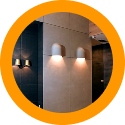
Beautiful and durable, maintenance-free floors are not a contradiction! Urethane Concrete flooring is ideally suited for installation into wet environments such as distilleries. It cures quickly, provides excellent chemical and thermal shock resistance, and can withstand organic acids and harsh cleaning chemicals. When metallic colors are added to the urethane concrete flooring, distilleries can enjoy an extremely hard-wearing floor with excellent impact and abrasion-resistant properties that is impervious and non-porous that can also be visually appealing to distillery visitors.
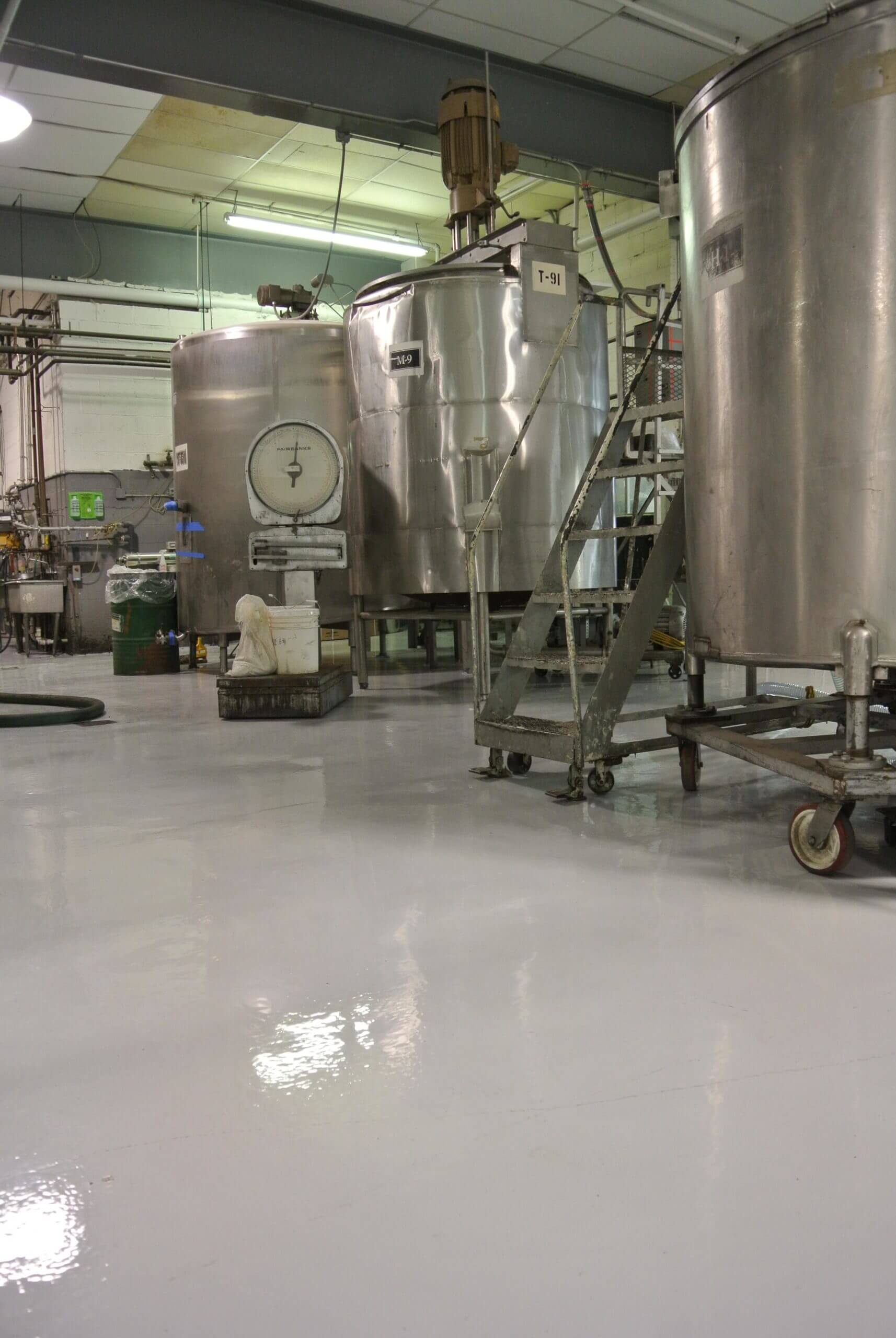
Recently we gave the following three options to a general contractor working on a distillery in Saint Lucia (Island in the Caribbean). They approached us with a request to make flooring recommendations based on the pictures they send us. The existing flooring condition was not good. It had be raised at least 18 mm thickness. Since it is not possible to get economically a thickness of 18mm, we recommended them to use a combination of self-leveling concrete and urethane concrete systems. We also recommended three different options at three different price points.
Option 1 – self-leveling concrete + Urethane concrete
a. Apply a coat of Perdure E02, 100% solids epoxy primer
b. 30 mesh broadcast sand, purchased locally
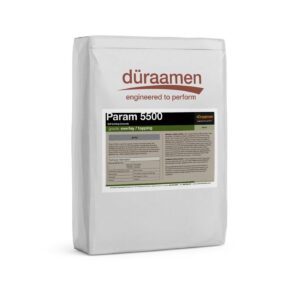
c. Install Param 5500 Grey @ 1/2″ thick ~ 12mm
d. Install Kraftig SC, urethane concrete primer
e. Install Kraftig TG, urethane concrete body coat @1/4” thick ~ 6 mm
f. Apply Perdure P72, polyaspartic topcoat with non-skid additive if necessary
Option 2 – self-leveling concrete + self-leveling chemical resistant epoxy
a. Apply a coat of Perdure E02, 100% solids epoxy primer
b. 30 mesh broadcast sand, purchased locally
c. Install Param 5500 Grey – 200 bags @ 1/2″ thick ~ 12mm
d. Apply Perdure E32, water based epoxy primer
e. Install Perdure E10, 100% solids epoxy body coat, pigmented
f. Blend Self-leveling additive with Perdure E10
g. Apply Perdure NE25, chemical resistant epoxy
h. Apply Perdure P72, polyaspartic topcoat with non-skid additive if necessary
Option 3 – self-leveling concrete + high build chemical resistant coating
a. Apply a coat of Perdure E02, 100% solids epoxy primer
b. 30 mesh broadcast sand, purchased locally
c. Install Param 5500 Grey @ 3/4″ thick ~ 18mm
d. Apply Perdure E32, water based epoxy primer
e. Apply Perdure NE25, chemical resistant epoxy two coats
f. Apply Perdure P72, polyaspartic topcoat with non-skid additive if necessary
Flooring Packages for DIY Enthusiasts – https://duraamen.com/shop/floor-kits/urethane-modified-concrete-floor-kit/