
If you’re installing a new floor in your residential, commercial or industrial space, you’re probably wondering about epoxy.
Epoxy flooring has evolved well beyond the plain gray warehouse floors it was once associated with — today it is one of the most versatile, design-forward, and cost-effective flooring systems available for residential, commercial, and industrial spaces alike. At its core, epoxy is a thermosetting resin that, when combined with a hardener, undergoes a chemical reaction and cures into an exceptionally hard, dense, and durable surface that bonds tightly to concrete, tile, plywood, and a wide range of other substrates. One of the most compelling reasons contractors and property owners choose epoxy over traditional tile is the elimination of grout lines — that seamless surface means no hidden channels where dirt, moisture, and bacteria can accumulate, making epoxy far more hygienic and significantly easier to clean and maintain. Properly specified and installed, an epoxy floor system with a polyurethane or polyaspartic topcoat can withstand compressive loads exceeding 10,000 psi, meaning it holds up confidently under heavy industrial equipment, racking systems, forklift traffic, and the daily punishment of high-volume commercial environments.
The upfront cost advantage is equally significant — a quality epoxy installation typically runs a fraction of the cost of ceramic or porcelain tile when you factor in both materials and labor, and the long service life of a well-maintained epoxy floor means fewer replacements and lower lifecycle costs over time. Color and design flexibility is another area where epoxy shines: from solid commercial colors and decorative quartz blends to the dramatic, three-dimensional depth of metallic epoxy systems like Duraamen’s Lumiere, there is a finish option to suit virtually every aesthetic from utilitarian to high-end. It is important to note that standard epoxy is not UV-stable and will amber over time in spaces with direct sunlight exposure — for exterior applications or sun-drenched interiors, a UV-resistant polyaspartic or polyurethane topcoat is the correct solution to protect both the appearance and integrity of the floor. Surface preparation is non-negotiable before any epoxy installation: the concrete must be mechanically profiled through shot blasting or grinding, and all contaminants including oil, grease, curing compounds, and existing sealers must be fully removed to ensure the epoxy bonds correctly and does not delaminate prematurely. For anyone considering an epoxy floor for a home, garage, commercial kitchen, retail space, or industrial facility, Duraamen offers a complete range of professional-grade epoxy systems along with DIY floor kits, expert guidance, and installation tutorials to help ensure the best possible outcome — contact us today to find the right system for your project.
Epoxy flooring is the favorite choice of many designers and comes in a number of colors and textures to match any aesthetic choice. But will it suit all of your specific needs?
Read below to answer your questions about epoxy floors.
1. What Is Epoxy Flooring Used For?
Because it is both durable and relatively inexpensive, epoxy flooring is used for many purposes in industrial, commercial and residential settings.
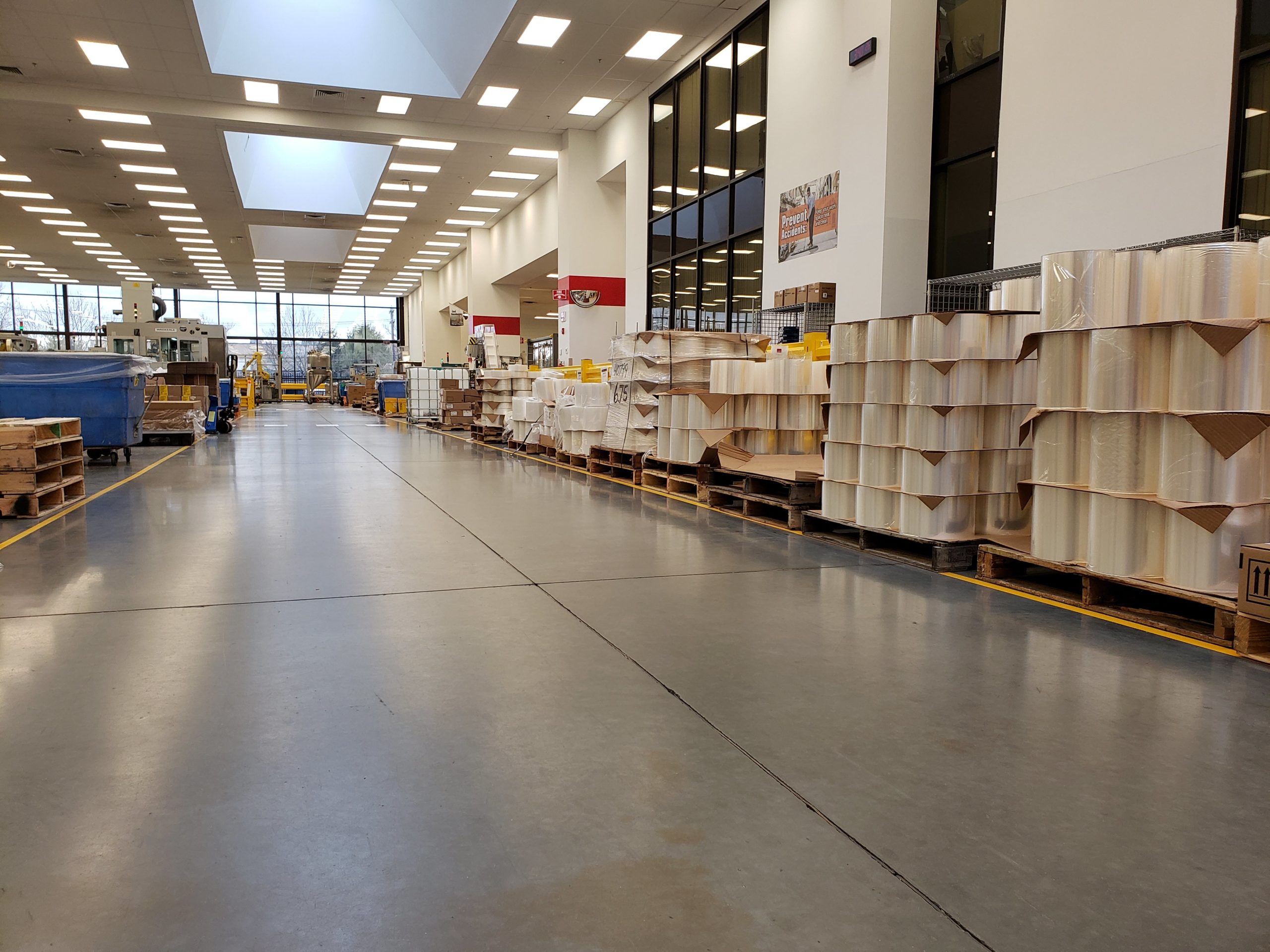
Epoxy is smooth, often slip resistant, and able to withstand enormous amounts of weight, making it a top choice for warehouses and inventory lots where motorized equipment is used. Because it is seamless, it is often preferred to tile, which houses dirt and bacteria in the grout-filled seams that needs to be regularly and carefully cleaned.
It is also used in restaurants and kitchens to avoid slips and spills as well as in homes to seal bathtubs and showers, surround pools, or coat garage floors.
2. How Is Epoxy Flooring Installed?
Epoxy flooring systems are made up of multiple coats of epoxy resin. Typically, they involve the following three coats:
The actual installation of epoxy depends on the substrate of the initial surface, but the principles are the same. It begins with the preparation of the substrate flooring, which requires a textured profile for which the resin can mechanically bond; you’re aiming for a surface the epoxy can adhere to. Epoxy is mixed on site by combining epoxy resin with hardener to meet a specific ratio, then applied and smoothed out.
Epoxy floors are very durable, but after primer and body coats of epoxy are poured and cured, it’s recommended that it’s finished off with a polyurethane topcoat to increase abrasion resistance.
3. Can Epoxy Flooring Be Removed, and If So, How Much Does It Cost?
Of course! Epoxy is durable and long-lasting, but all flooring must be replaced at some point. It may become worn (though epoxy is known to last a decade or longer), or you may decide on a new color or texture for aesthetic reasons.
The epoxy removal process is easy and can be done by a professional or on your own. You’ll need a particular form of stripping solution to correspond with the form of epoxy floor you have (water-based or solvent-based), a mop, a metal scraper, gloves, eye protection, and a face mask. The entire process can be completed in a day or two.
If you hire a professional, epoxy flooring removal costs between $1 and $2.50 per square foot.
4. Is Epoxy Flooring More Cost Effective Than Tile?
Yes! Epoxy is only $1-4 per square foot, depending on the thickness of the flooring. Meanwhile, the cost of good quality designer tiles starts at $4 and goes up from there, with an additional $5 to $10 for installation.
Additionally, just like tile, epoxy has a wide range of color and design options. Uniform colors may be applied, or it’s possible to add metallic pigments in order to create beautiful floors with a metallic appearance.
5. Can I Put Epoxy Over Concrete, Wood or Tile?
Yes! With specialized preparation and coatings, epoxy can be put over almost any surface, including:
- Concrete.
- Granite.
- Marble.
- Ceramic.
- Porcelain.
- Tile.
- Plywood.
- MDF/MDX.
6. How Do I Choose Epoxy Coatings?
- A. Polyamide Epoxies
- B. Polyamine Epoxies
- C. Phenolic Epoxies
- D. Novolac Epoxies
7. Does Epoxy Flooring Scratch Easily?
If treated with polyurethane or polyaspartic top coat, epoxy becomes one of the most difficult floorings to scratch or gouge. This flooring can handle around 10,000 psi without damage. This is one of the prime reasons it is so popular in warehousing units, airports and other industrial locations.
It should be noted that even the toughest floors can scratch with enough force. This can be easily avoided with padding beneath objects that are moved across the floor.
8. Is Epoxy Flooring Good for Homes?
Absolutely! Epoxy is commonly used inside as a replacement for tile in order to avoid grouting issues. It can be used in bathrooms, around tubs and sinks, and even in kitchens, mudrooms, and bathrooms.
Because epoxy is seamless, it doesn’t have any grout lines, making it low maintenance. Essentially, in any area of your home where water may be present, epoxy flooring can help reduce slippage and increase traction.
9. Can Epoxy Flooring Be Used Outdoors?
While epoxy cannot be used outside (it will turn amber-colored after a period of time), it is frequently installed over concrete garage floors to help even the surface, fill hairline cracks and provide a safe working surface that will last a long time.
10. How Is Epoxy Flooring Made?
Epoxy is a chemical mixture made with hardener, resin and coloring. The base coat is applied in its liquid form and allowed to dry. Multiple layers can be added this way.
act with an epoxy mix can cause irritation, eczema or lesions. Safety equipment should always be used during handling.
The No. 1 Choice in Professional and DIY Flooring
Duraamen provides the highest performance flooring products for contractors, property managers and DIY home remodelers. Professional clients love our quick transactions and professional service, and DIY remodelers choose us for our informed staff.
Visit us on the web today to learn more about flooring options. There you’ll find DIY installation kits and a number of helpful instructional videos on our YouTube channel.